Until the 1870s, color images were rare. Color was mostly limited to items that could be painted, painstakingly by an artist or artisan. For the public, the world of the printed image was black and white.
After the Civil War, advances in printing, chromolithography, allowed for beautiful color images to be created cheaply. Signage, labels and posters, like a field of flowers, quickly bloomed into stunning color with clever, intricate designs. Hypercompetitive industries like tobacco manufacturing quickly took advantage of the new, colorful technology in order to to reach customers and differentiate themselves from each other

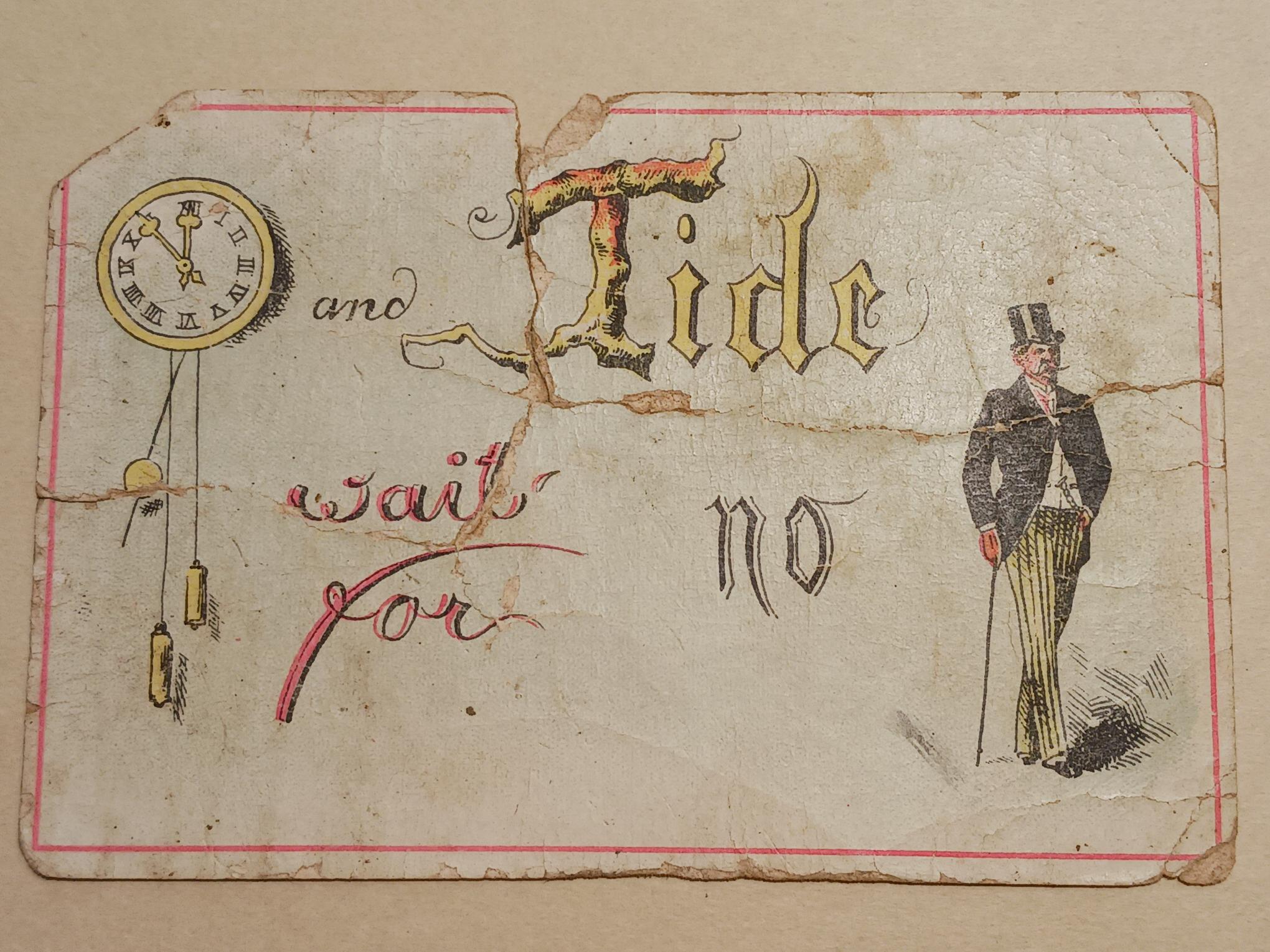
Trade cards were one of the earliest advertising tools available to late 19th-century manufacturers. The cards were about the size of a baseball card, pocket-sized advertising posters with what were often whimsical or humorous scenes often unrelated to the actual product.
Traveling salesmen would bring books of stock images for the manufacturer to choose from. The company name and product could be printed over the image or the company name and information could be added to the back for additional cost. Manufacturers who could afford it commissioned their own original cards.
Trade cards were given to customers at the store when the purchase was made. Collectors would often go back to make additional purchases when new cards were released. Collecting trade cards became a national obsession. Collectors frequented stores, traded with each other and wrote to manufacturers requesting the latest cards, placing their collection in an album or scrapbook. The public’s appetite for color images was voracious.

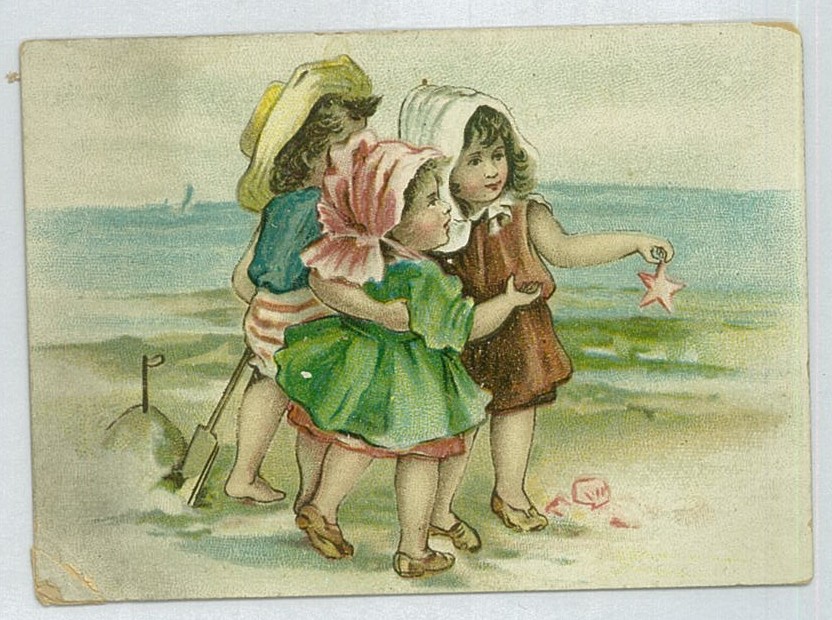
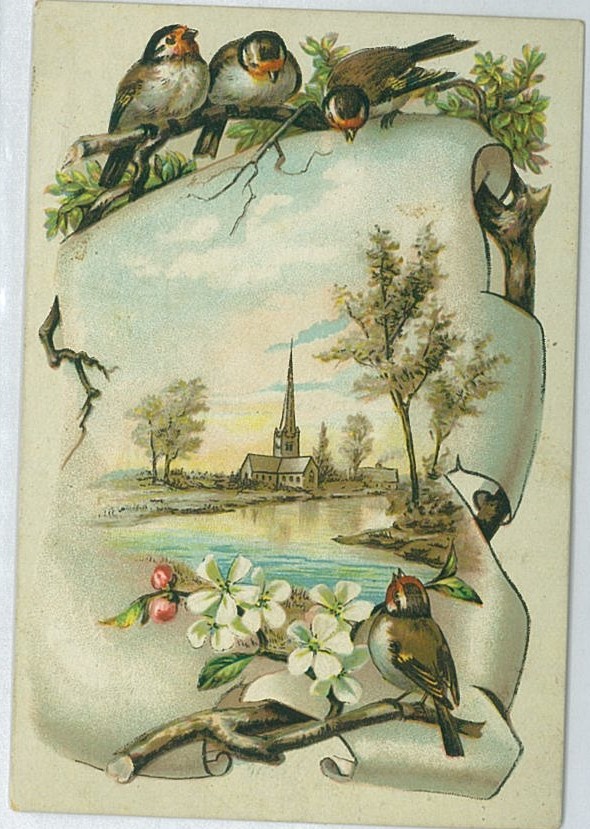
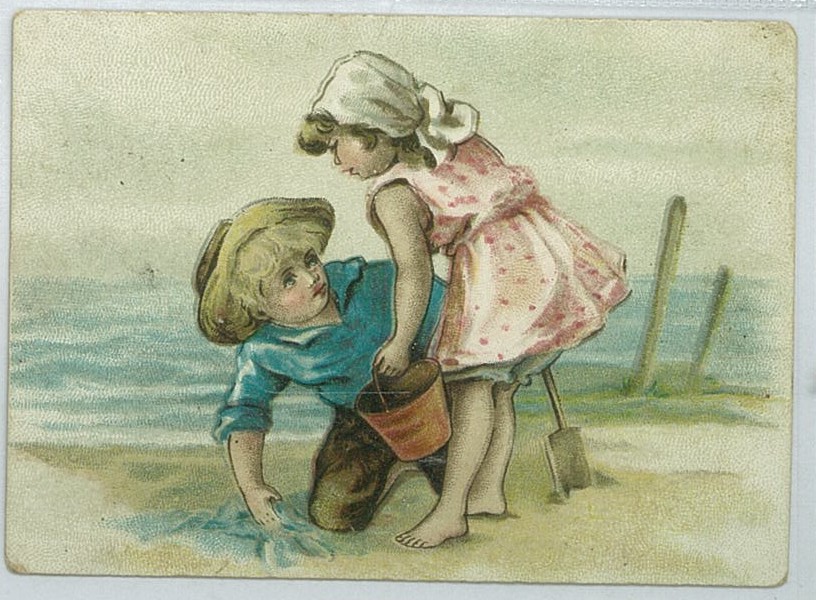

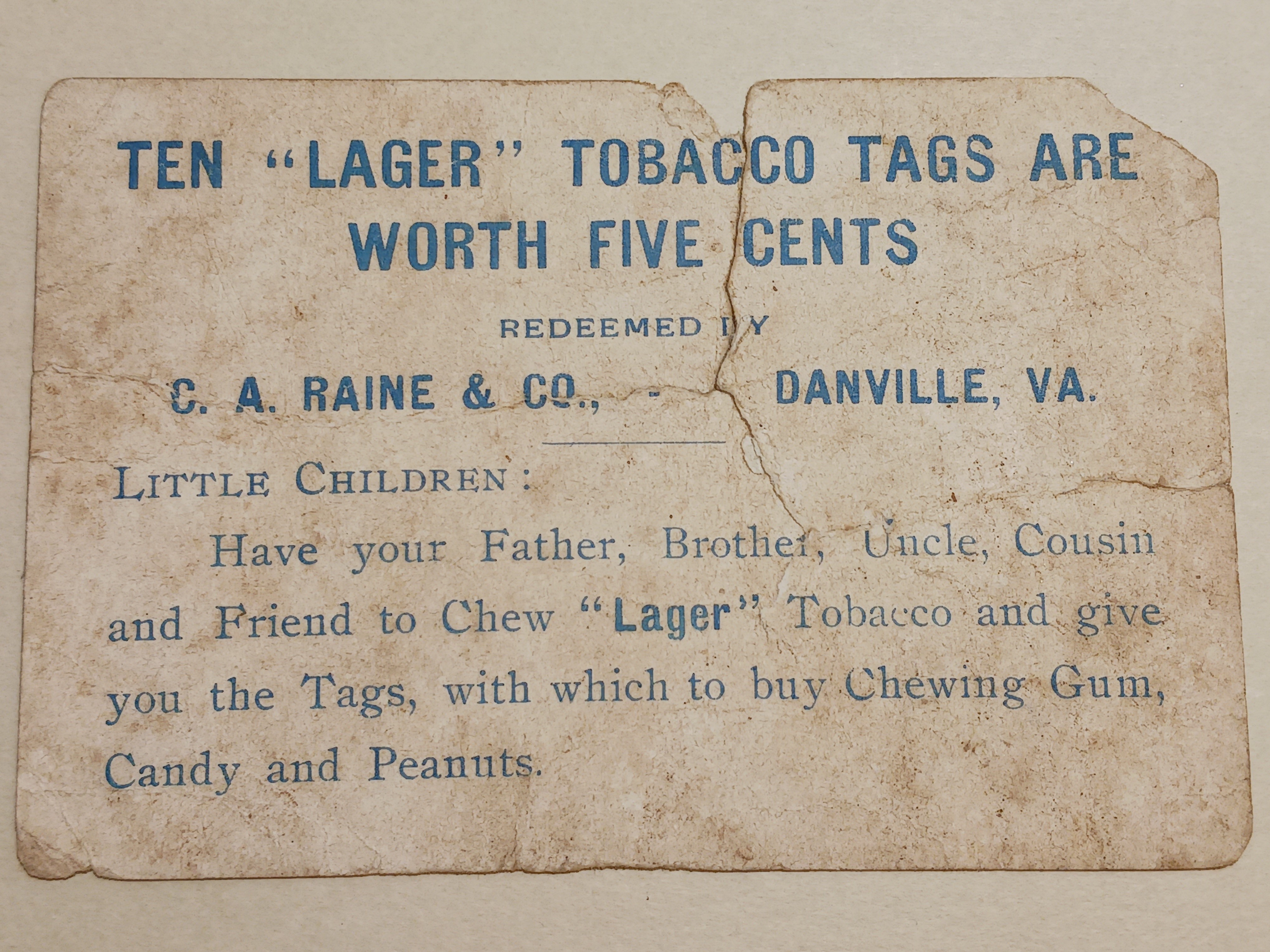
Few trade cards from Danville’s C.A. Raine & Co. survive. Most of them are for its Lager plug tobacco but one I’ve discovered is for Close Shave, the brand that features a monkey shaving with a straight razor.
Trade cards began to fade away by the 1890s when color advertising became cheap enough to start appearing in magazines. Businesses, then as now, moved quickly to new avenues for the attention of the shopping public.
Sources:
Petrone, Gerard S. Tobacco Advertising: The Great Seduction With Values. Schiffer Publishing. 1996.
 C.A. Raine & Co.