Until the 1870s, color images were rare. Color was mostly limited to items that could be painted, painstakingly by an artist or artisan. For the public, the world of the printed image was black and white.
After the Civil War, advances in printing, chromolithography, allowed for beautiful color images to be created cheaply. Signage, labels and posters, like a field of flowers, quickly bloomed into stunning color with clever, intricate designs. Hypercompetitive industries like tobacco manufacturing quickly took advantage of the new, colorful technology in order to to reach customers and differentiate themselves from each other
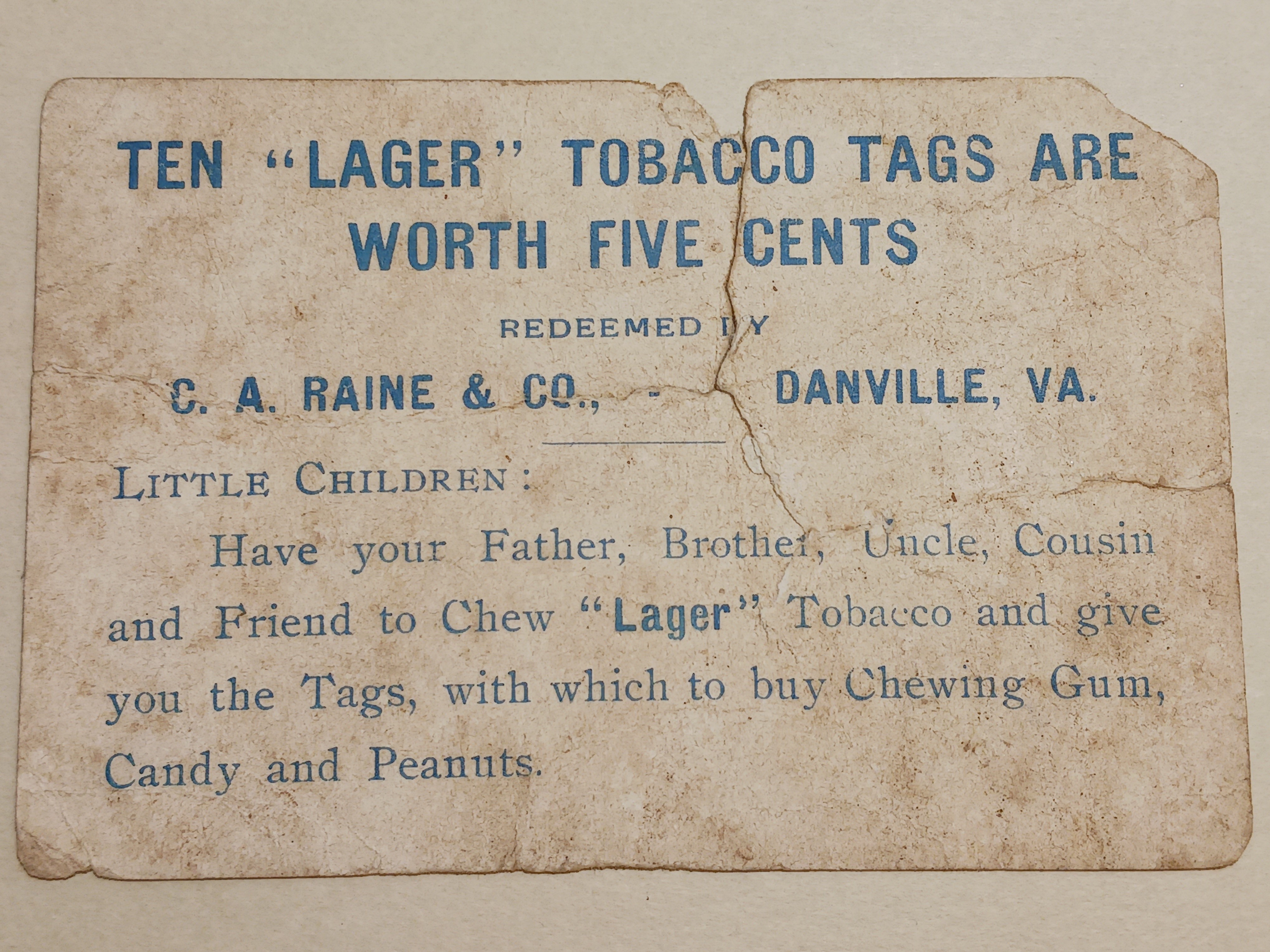
Close Shave Tobacco trade card from C.A, Raine & Co. Date cannot be determined. Image: Courtesy of Bobby Ricketts, administrator, Danville & Pittsylvania County History Group, Facebook.
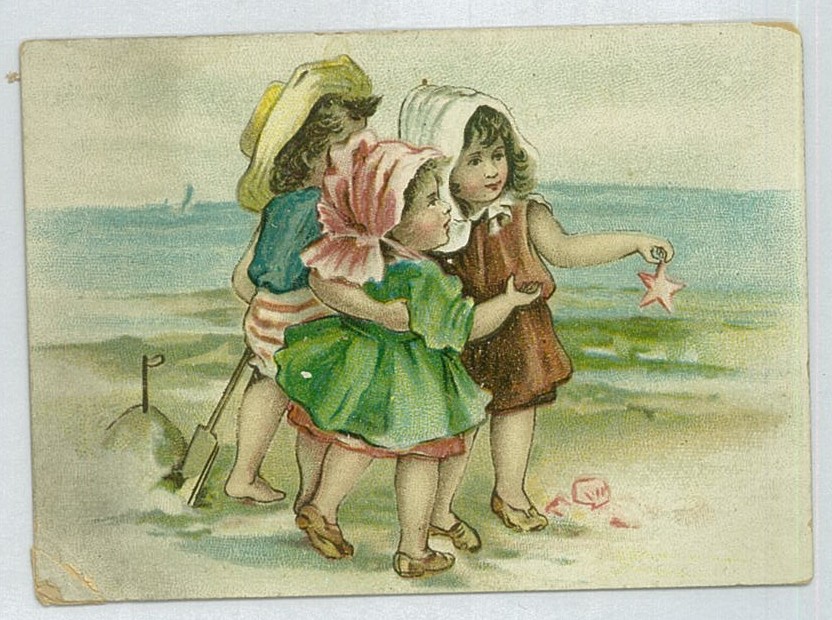
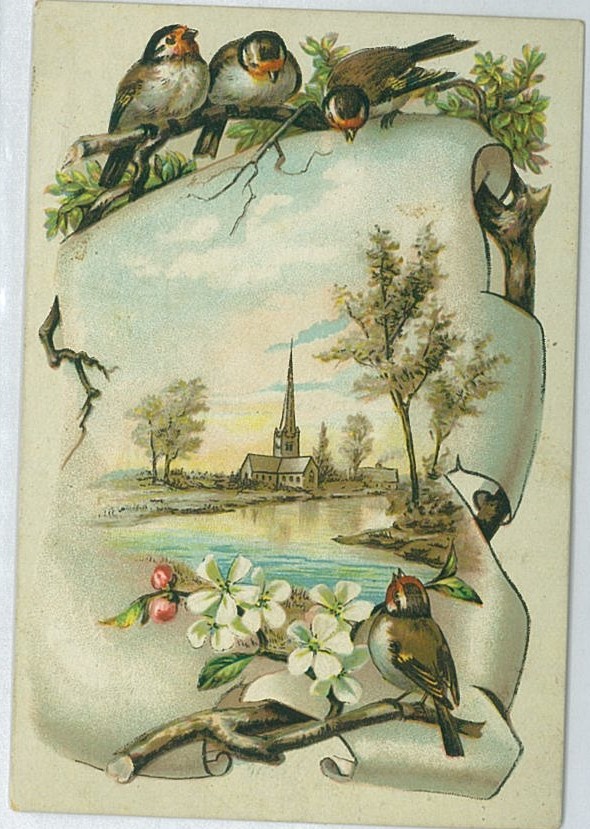
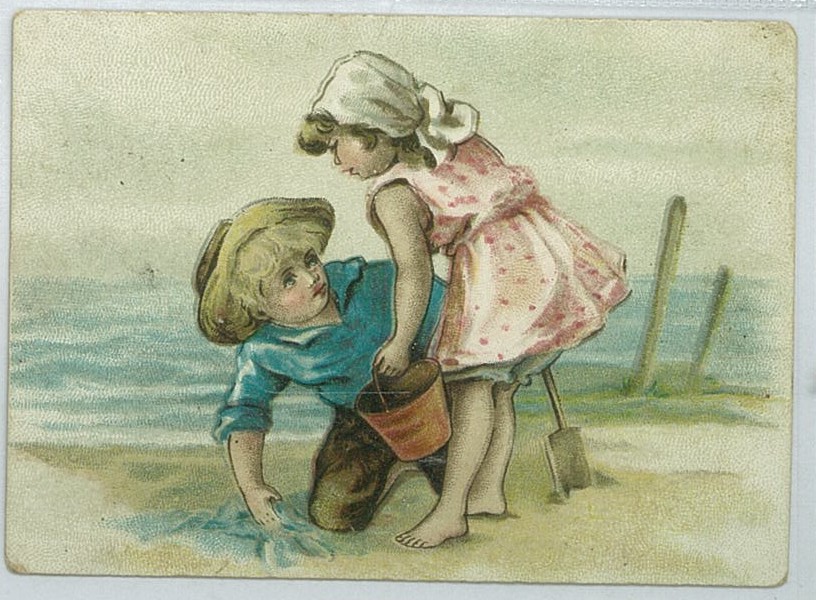
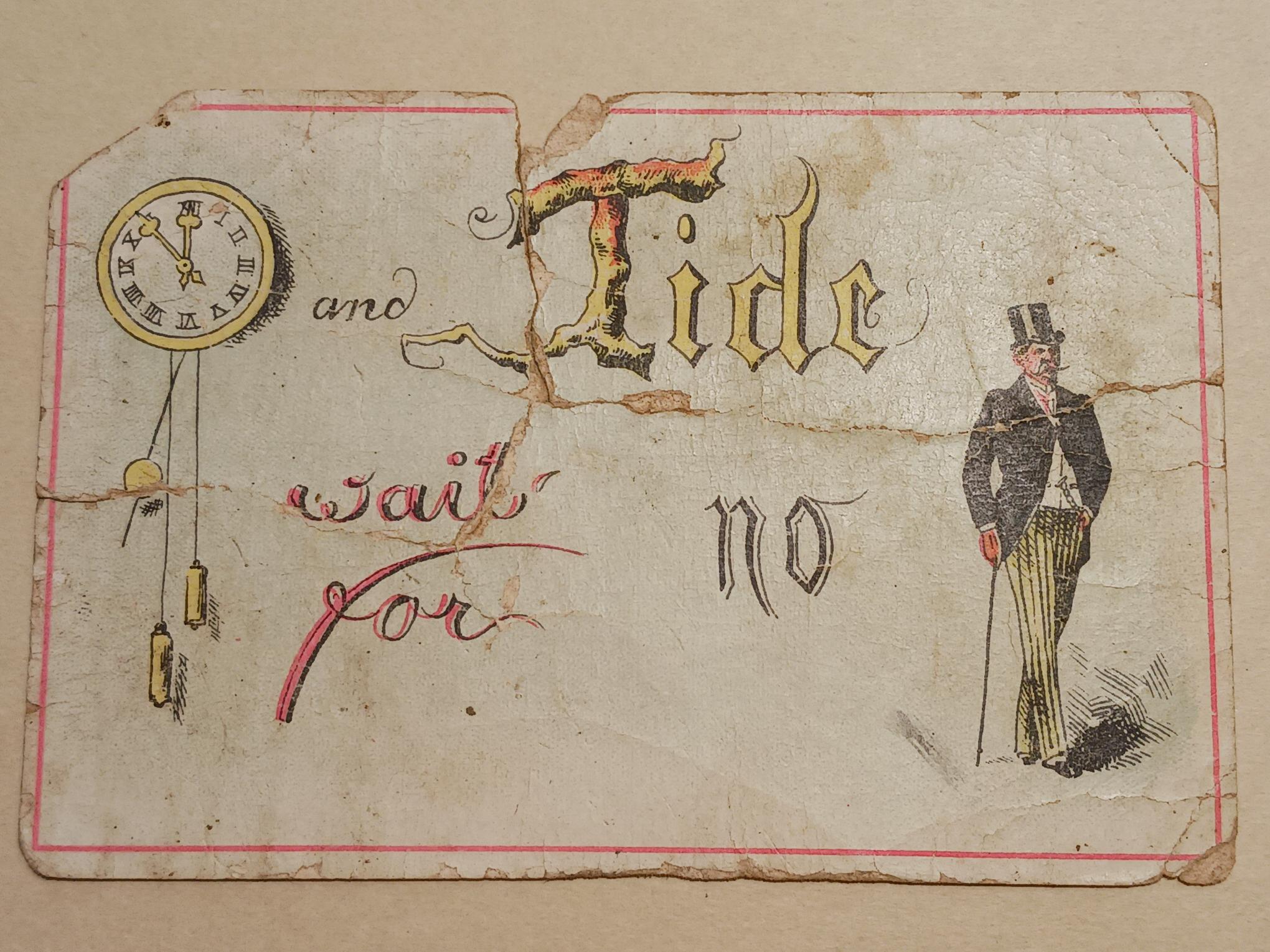
Trade cards were one of the earliest advertising tools available to late 19th-century manufacturers. The cards were about the size of a baseball card, pocket-sized advertising posters with what were often whimsical or humorous scenes often unrelated to the actual product.
Traveling salesmen would bring books of stock images for the manufacturer to choose from. The company name and product could be printed over the image or the company name and information could be added to the back for additional cost. Manufacturers who could afford it commissioned their own original cards.
Trade cards were given to customers at the store when the purchase was made. Collectors would often go back to make additional purchases when new cards were released. Collecting trade cards became a national obsession. Collectors frequented stores, traded with each other and wrote to manufacturers requesting the latest cards, placing their collection in an album or scrapbook. The public’s appetite for color images was voracious.
Few trade cards from Danville’s C.A. Raine & Co. survive. Most of them are for its Lager plug tobacco but one I’ve discovered is for Close Shave, the brand that features a monkey shaving with a straight razor.
Trade cards began to fade away by the 1890s when color advertising became cheap enough to start appearing in magazines. Businesses, then as now, moved quickly to new avenues for the attention of the shopping public.
Sources:
Petrone, Gerard S. Tobacco Advertising: The Great Seduction With Values. Schiffer Publishing. 1996.
“…J. M. Brower started me in the manufacturing of tobacco, giving me 1/3 net profit, the firm being C. A. Raine & Co. We continued business under many difficulties and without success until 1878, when Mr. Brower sold out lock, stock, and barrel.”
-From Charles Anderson Raine’s Autobiography
In his autobiography, Charles Anderson Raine makes two fleeting mentions of a man named J.M.. Brower. He was Raine’s employer for a short while and “started” him in the tobacco business. Who was this man who is mentioned briefly but had an outsized role in the formation C.A. Raine & Co.?
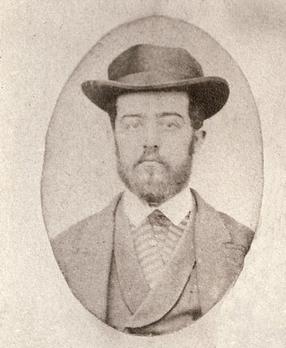
J.M. Brower circa 1870.
Charles Anderson Raine, 14, was devastated when his mother died in 1855. Soon after, the family was scattered. Charles left school and got a job as a clerk for a railroad contractor in what is now West Virginia. His little sisters were sent to live with an aunt in North Carolina. In a way, this tragedy provided the opportunity Charles needed to start in the tobacco business years later.
Census records show that in 1860 Charles’ sisters, Nannie M. Raine, 13, and Bettie Raine, 9, were living with Sallie N. Smallwood, their maternal aunt on a farm in northern Rockingham County, North Carolina, near the Virginia state line. Sallie is listed as the head of household; she was likely a widow. At this point, the two girls may have already lived with their aunt for several years.
In his autobiography, Charles writes about visiting his aunt and beloved teenage sisters in North Carolina while on furlough from the Confederate army in 1863 and in the summer of 1865 after the war ended.
In 1867, Nannie Raine, then 19 years old, married John Morehead (J.M.) Brower in Rockingham County. The Brower family operated a store there. J.M’s father Jacob W. Brower founded a large retail and manufacturing operation about 60 miles to the west in Mt. Airy, Surry County, North Carolina, on the state line with Virginia.
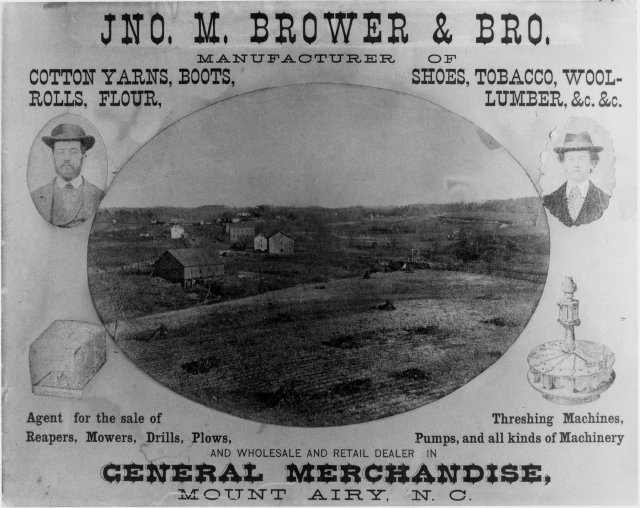
The 1880 industrial census lists the Browers as owning two grist and flour mills, a shoe factory and tannery, a cotton mill, a wool mill, and a saw mill, all located on and powered by the Ararat River. The Browers were a wealthy and influential family in that part of North Carolina. Jacob Brower died in 1868, the year after J.M. and Nannie married. Control of the family businesses, now styled J.M Brower & Bro., passed to J.M. and his brother.
Advertisement for J.M. Brower & Bro. circa the 1870s.The text shows the diversity of business interests in which the Brower brothers were involved. J.M. Brower is on the left. The image in the middle shows the various factory buildings along the Ararat River. Image: Courtesy of Surry County Historical Society.
The first time that Charles Anderson Raine and J.M. Brower crossed paths in a business sense was in 1871 when, after giving up on farming for his father-in-law, Charles moved to Mt. Airy to work for J.M. Brower & Bro. as a store clerk for $50 a month, eventually bringing his wife Bettie with him.
Charles left for a new start in Danville after a year or less but it was J.M. Brower who bankrolled Charles’ first foray into the tobacco business three years later in 1874. The venture was unsuccessful and Brower sold his interest four years later in 1878. Likely, the challenges of that first run at tobacco manufacturing taught Charles many valuable lessons.
So, the mystery of J.M. Brower or Mr. Brower from the autobiography is solved. He was Charles Anderson Raine’s brother-in-law. Perhaps the relationship is not mentioned in the autobiography because C.A. Raine’s children, his audience, already knew Brower as their uncle. Regardless, the story of J.M. Brower doesn’t end there.
J.M. Brower was an ambitious man and quickly turned to politics after the Civil War aligning with the Republican party. Until large-scale suppression of African American voting rights after 1900, the Republican party was a powerful force in North Carolina; it depended on a coalition of Blacks and Whites to wield power and most white Republican voters came from the piedmont and western portions of the state.
Brower won an election to the North Carolina state senate (1876-1878) and then was elected twice to the U.S. House of Representatives (1887-1891). In 1889 he made a play to become the Speaker of the House according to the Statesville (NC) Record and Landmark newspaper but was unsuccessful. After leaving Washington D.C., he was elected to a single term in the North Carolina House of Representatives (1896-1898).
J.M. Brower was held in high regard in Mt. Airy and Surry County but he, and most white Republicans, was hated with a passion by Democrats in the state. North Carolina newspapers of the time, especially those in the eastern half of the state, portrayed Brower as a traitor and used racist language to describe him and his constituents. It is likely that he and his family were in personal danger at times.
In 1907, Brower left North Carolina with his family to farm and started new businesses in Boswell, Choctaw County, Oklahoma. In the 1910 census his occupation is listed as “private income.” He died in 1913 and was buried in Mt. Airy. Two of his sons remained and settled in Texas, another joined government service abroad. The rest of the family relocated to Mt. Airy. Nannie Raine Brower lived with two of her daughters and died of senility and myocarditis on March 27, 1938, at the age of 90.
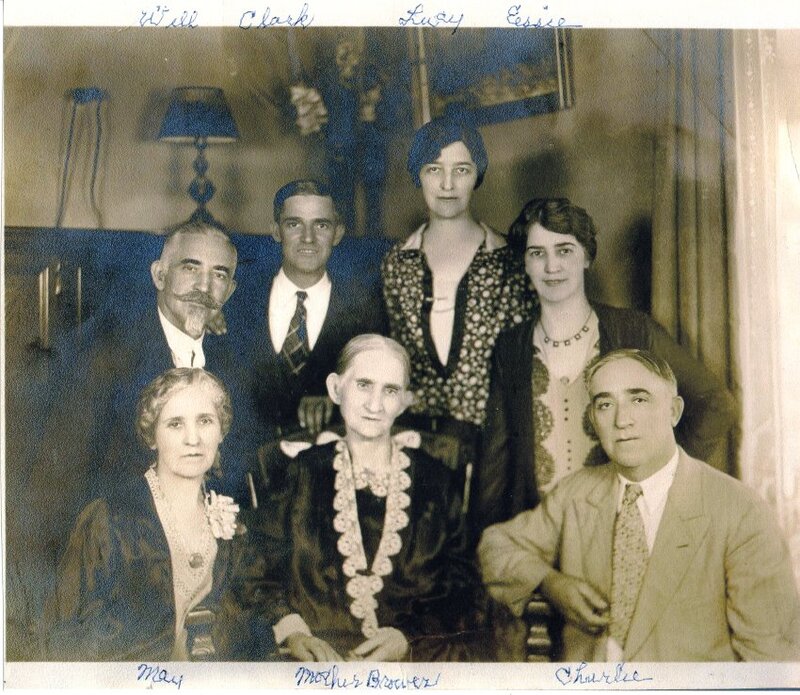
Photograph of the Brower family children with their mother Nannie Raine Brower, Charles Anderson Raine’s sister, Front row from left May Brower, Nannie Raine Brower, Charlie Brower. Second from from left William Brower, Clark Brower, Lucy B. Cook, and Essie B. Fawcett. Photograph is undated but is likley circa 1920s. Image: Courtesy of Surry County Historical Society.
Sources:
1860 U.S. Census, Northern Division, Rockingham County, North Carolina, population schedule, Wentworth post office, p. 32, dwelling 229, family 224.
1880 U.S. Census, Mt. Airy, Surrey County, North Carolina, industrial schedule, Mt. Airy post office, p. 1.
1910 U.S. Census, Hunter Township, Choctaw County, Oklahoma, population schedule, Boswell, p. 20.
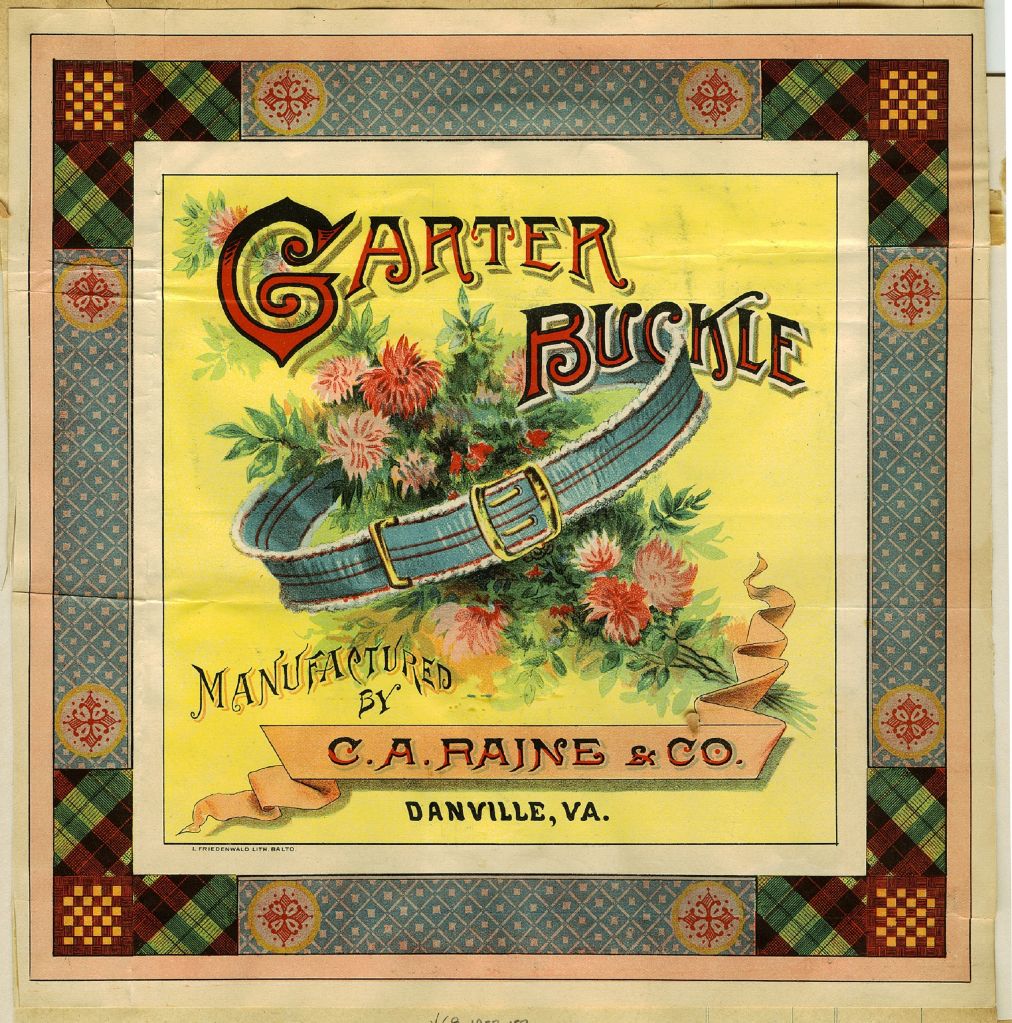
Caddy label for Garter Buckle brand plug tobacco, C.A. Raine & Co. A colleague suggested that this brand may have been aimed at female customers given the name and feminine imagery. Image: Courtesy The Valentine Museum.
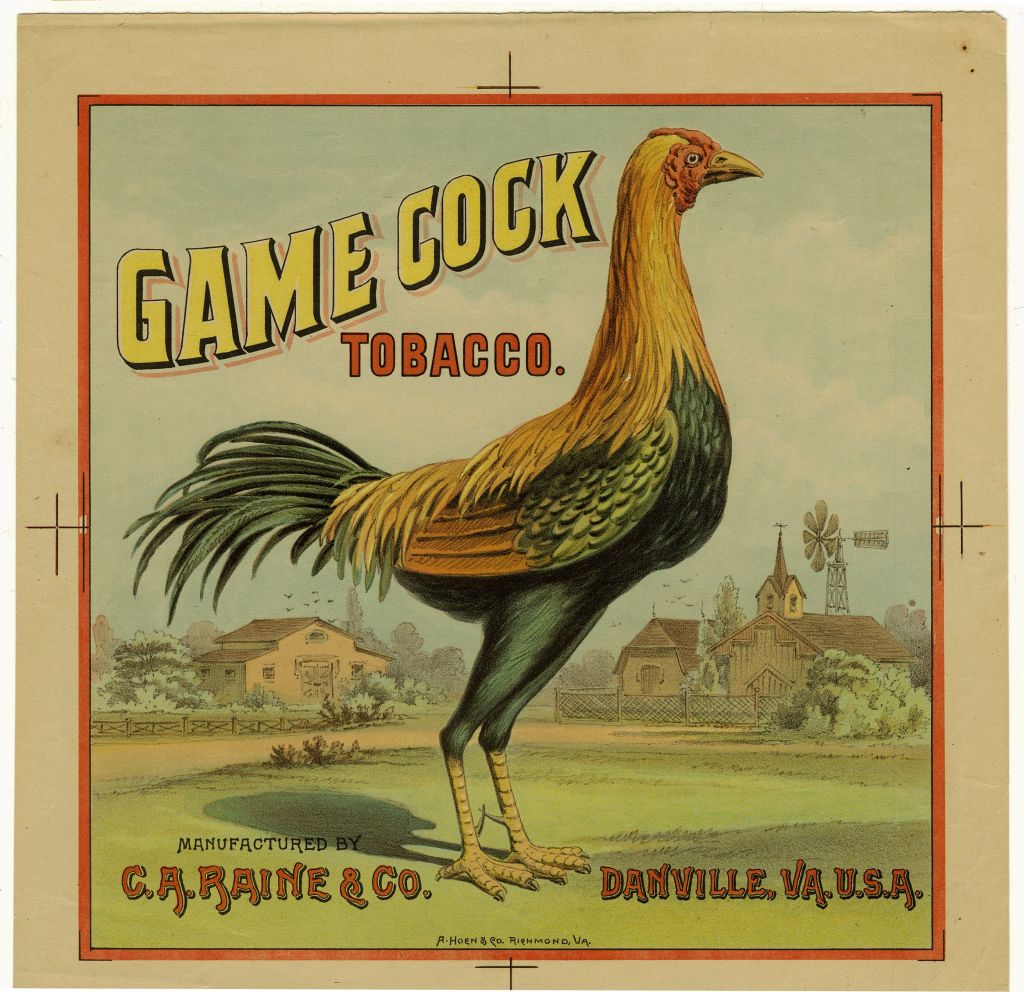
Remnants of the C.A. Raine & Co. tobacco manufacturing operation are difficult to find, as if the artifacts were scattered to the wind. As luck would have it, a group of caddy labels or crate labels survived and are now in the collection of the Valentine Museum in Richmond, Virginia.
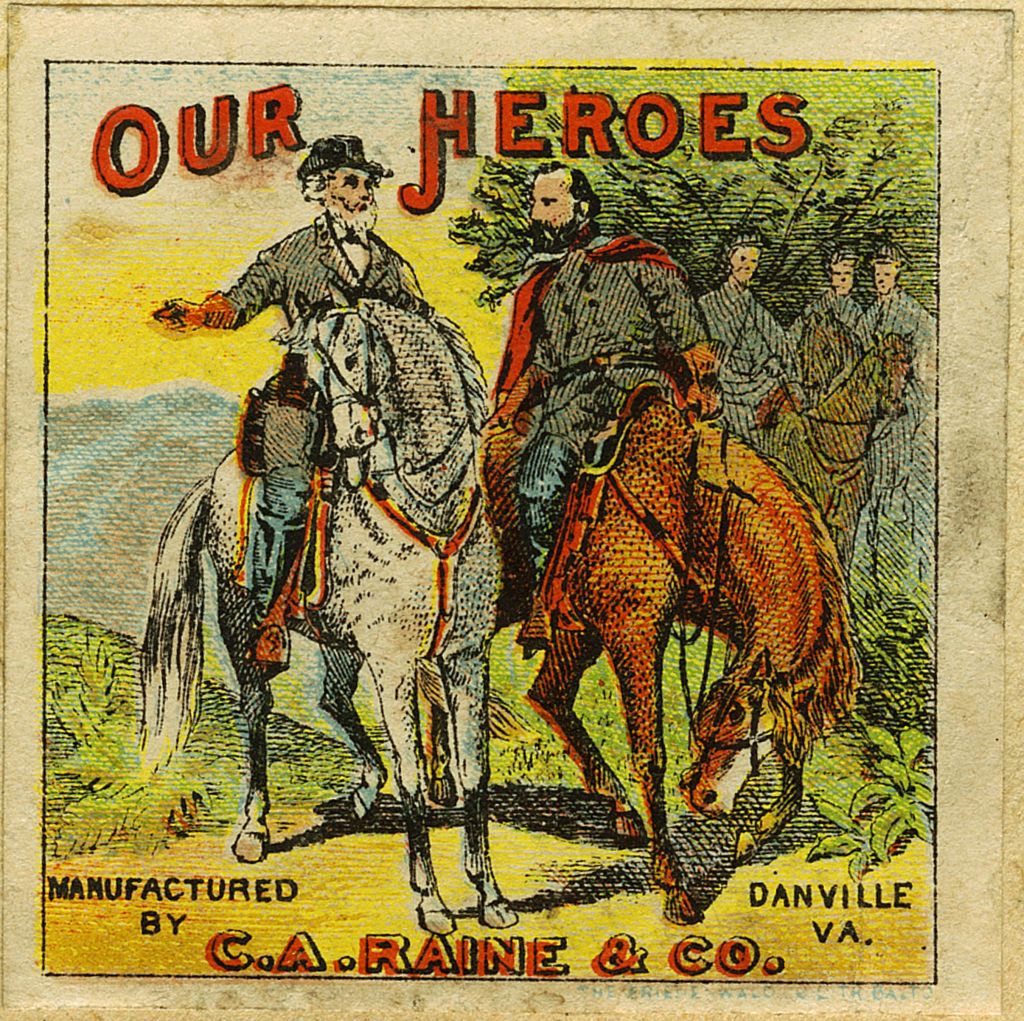
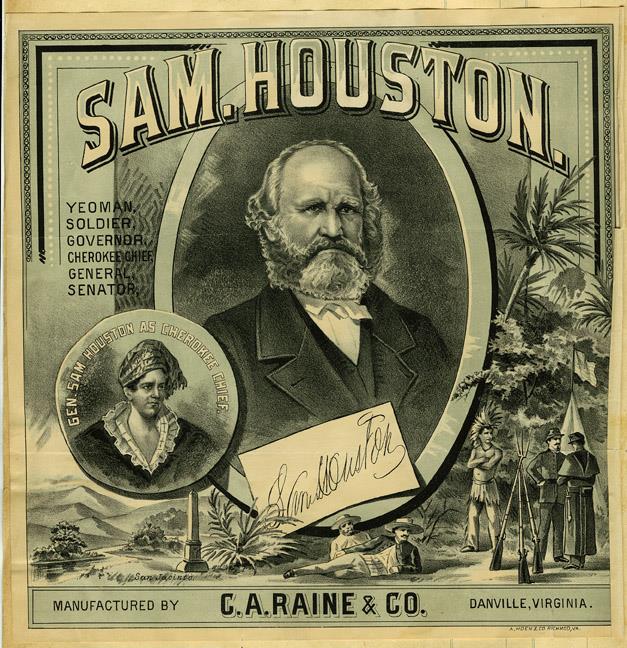
Caddy labels were affixed to or painted onto wooden crates that contained the manufacturer’s product. Extreme competition in the tobacco industry starting in the 1880s pushed manufacturers to create more varied and striking labels. In 1968 the American Tobacco Company, with offices in Richmond, donated a group of tobacco labels to The Valentine Museum, a private museum dedicated to preserving the city’s history. Among those labels are seven from C.A. Raine & Co., glorious examples of label art from two different periods in the tobacco industry.
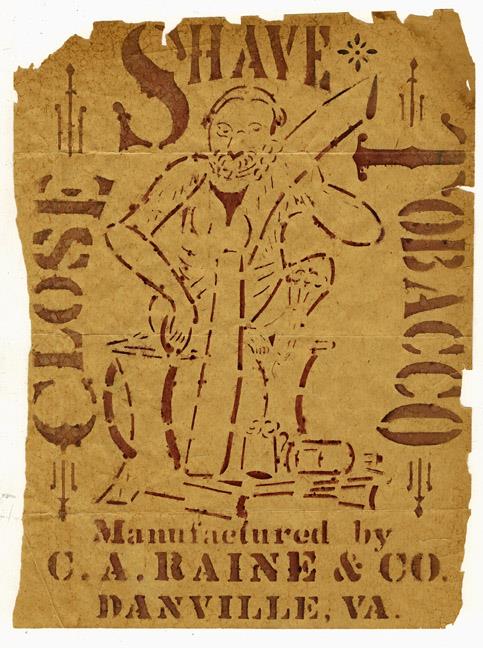
This circa 1870s label was created using a stencil. It would have been painted directly onto the wooden box containing Close Shave plug tobacco, one of C.A. Raine & Co.’s earliest brands. Image: Courtesy The Valentine Museum.
The first is the only surviving C.A. Raine & Co. caddy label – known to me – from the 1870s. It is for Close Shave plug tobacco. The humorous Close Shave brand art featured a monkey shaving himself with a straight razor. The Close Shave label was not a label really but a stencil which was used to paint the brand art, brand name and company name on the wooden box. Paper labels would come later.
The tobacco industry after the Civil War was hyper-competitive and manufacturers were quick to latch on to any advancement in technology or technique. Developments in chromolithography, a multi-color printing process, not only changed advertising but quickly revolutionized the printed world of Victorian America from black and white to color, freeing commercial artists to create images with unlimited shape and form.
Many of the leading lithography firms were started by German immigrants, where chromolithography was invented. C.A. Raine & Co. hired at least two of those firms based on the labels in the Valentine, A. Hoen & Co. and Isaac Friedenwald Co., both of Baltimore, Maryland.
The wonderful images in this post are shown with the generous permission of The Valentine Museum. If you would like to get a high-quality copy of your own – I have several framed on my wall – or to get a digital copy, go to this link to see the fee schedule and support this excellent institution. You can see these labels in the Valentine’s catalog at this link.
As I wrote previously, the labels were donated to The Valentine Museum by the American Tobacco Company. I have wondered if that offered a clue to the fate of C.A. Raine & Co. after its bankruptcy in 1895. The company name lived on in some form after the bankruptcy and Charles Anderson Raine’s death in 1902. That is a subject for a future post.
Sources:
Meggs, Phillip B., and Alston W. Purvis. Megg’s History of Graphic Design, 5th ed. Wiley, 2011.
Petrone, Gerard S. Tobacco Advertising: The Great Seduction With Values. Schiffer Publishing. 1996.



 C.A. Raine & Co.